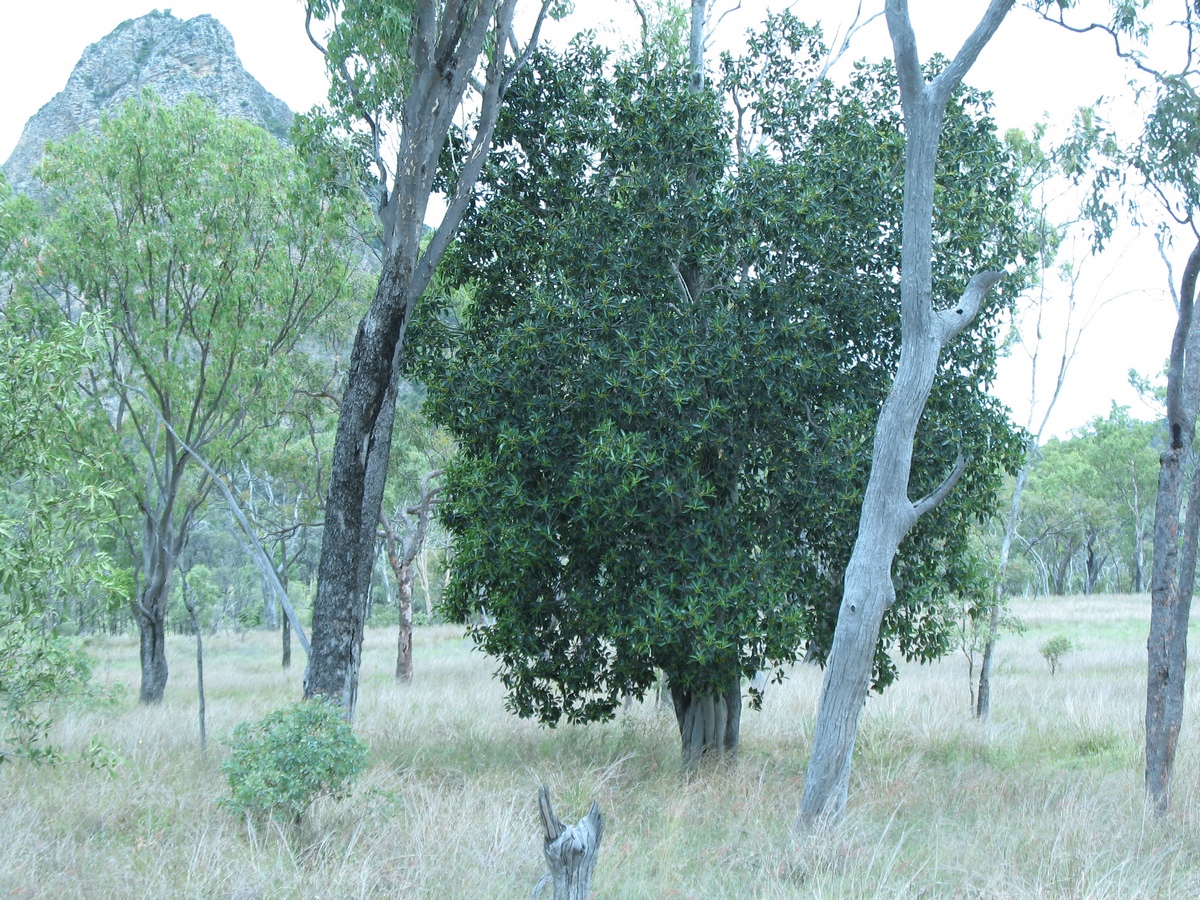
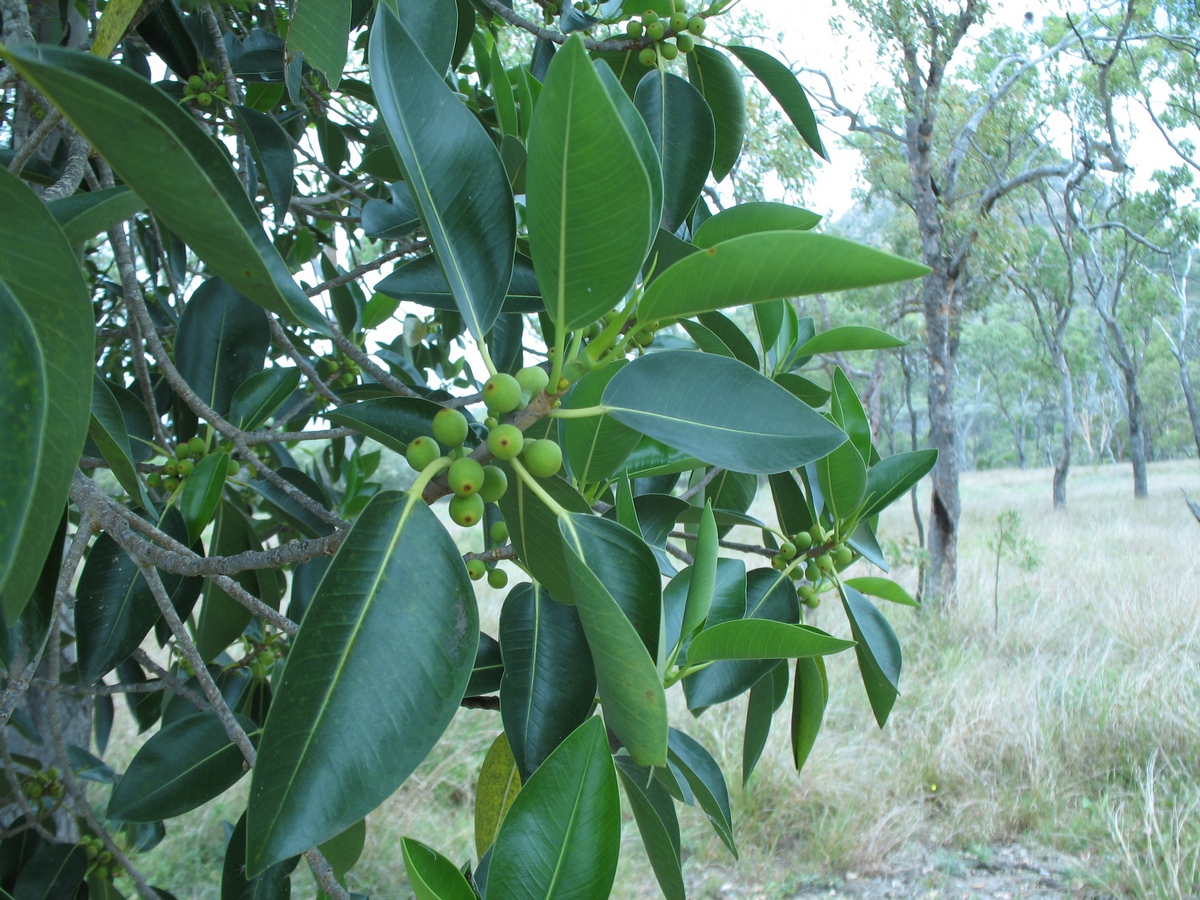
Desert fig is found right across northern Australia and while it's not common on
the Central Highlands, there are still a few to be found. Growing on any
host tree or rock outcrop with enough moisture to germinate a seed, it looks
too lush to be part of the normal landscape around here.
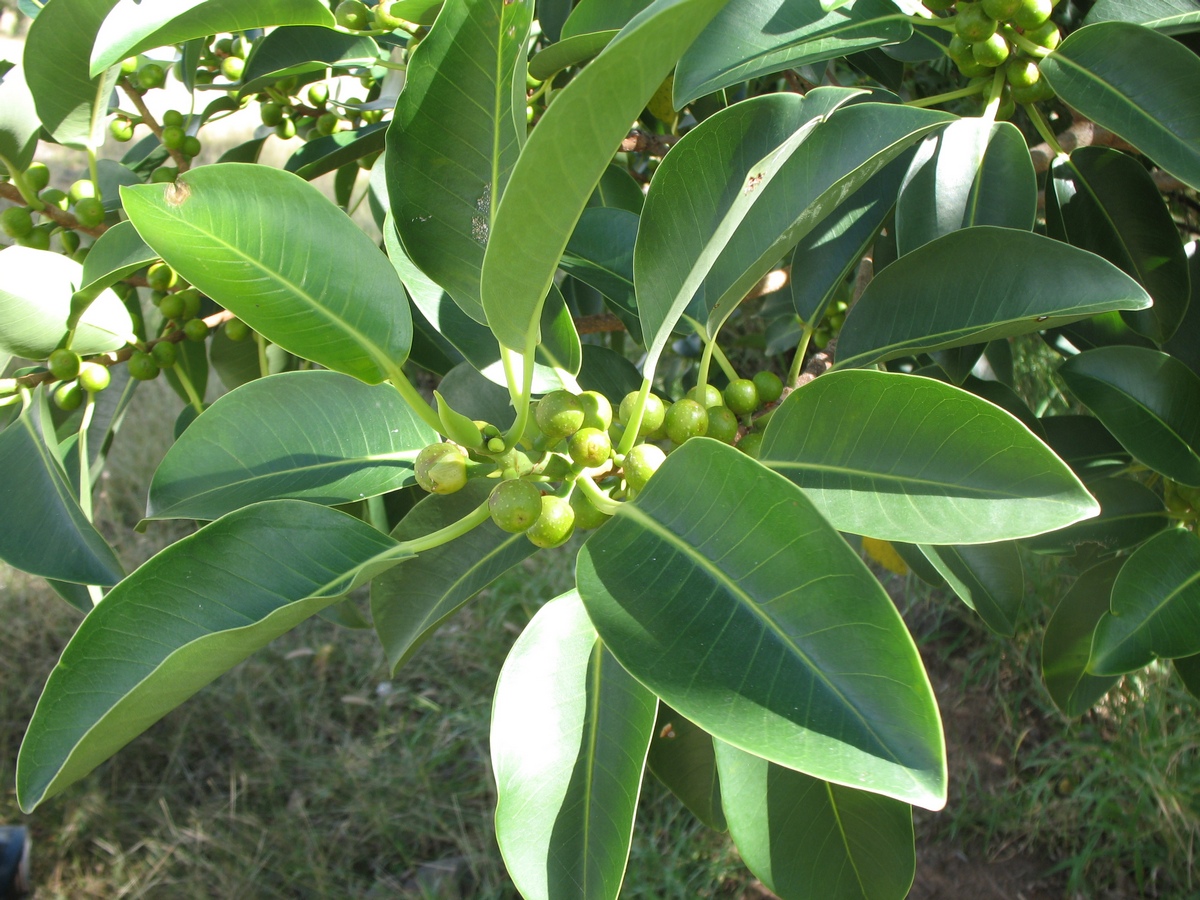
The fruit is said to be very tasty but I haven't tried it yet (not into figs!).
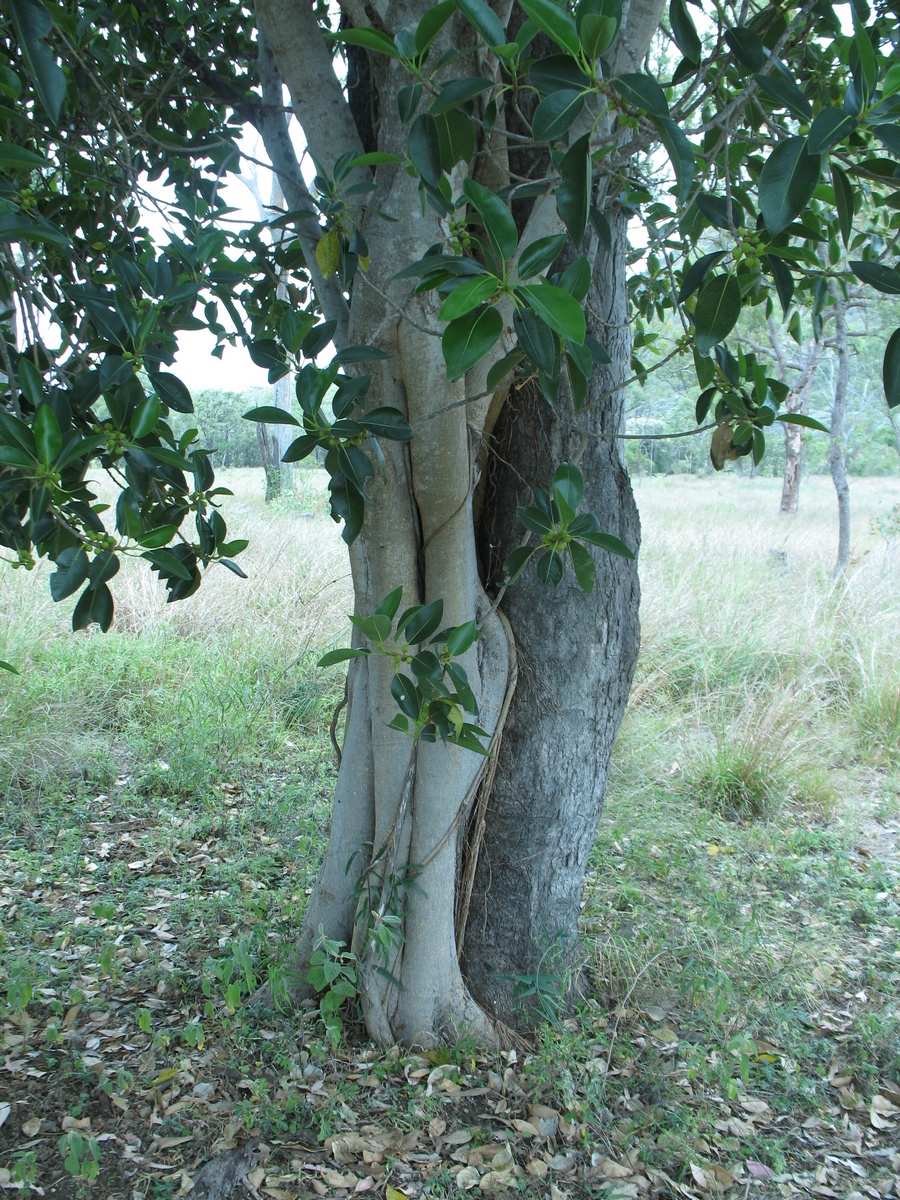
I have seen one tree near Peak Range that had a diameter of roughly 400mm
through the main trunk which would provide reasonable turning blanks.
When first cut, the cambium layer oozes latex like there's no end to it. If
you're going to put it on the lathe, get rid of the outer layers first or
wear a raincoat - not nice stuff. The timber shrinks quite a bit while
drying but in a relatively uniform way with little or no cracking at all.
Unfortunately, the very white colour you see when it's first cut doesn't
hold.
The timber is light, open-grained and machines very easily. It sands very well and soaks
up a lot of finish but has some interesting markings in the grain that make
it worthwhile - just hoping it doesn't go mouldy during the wet season now
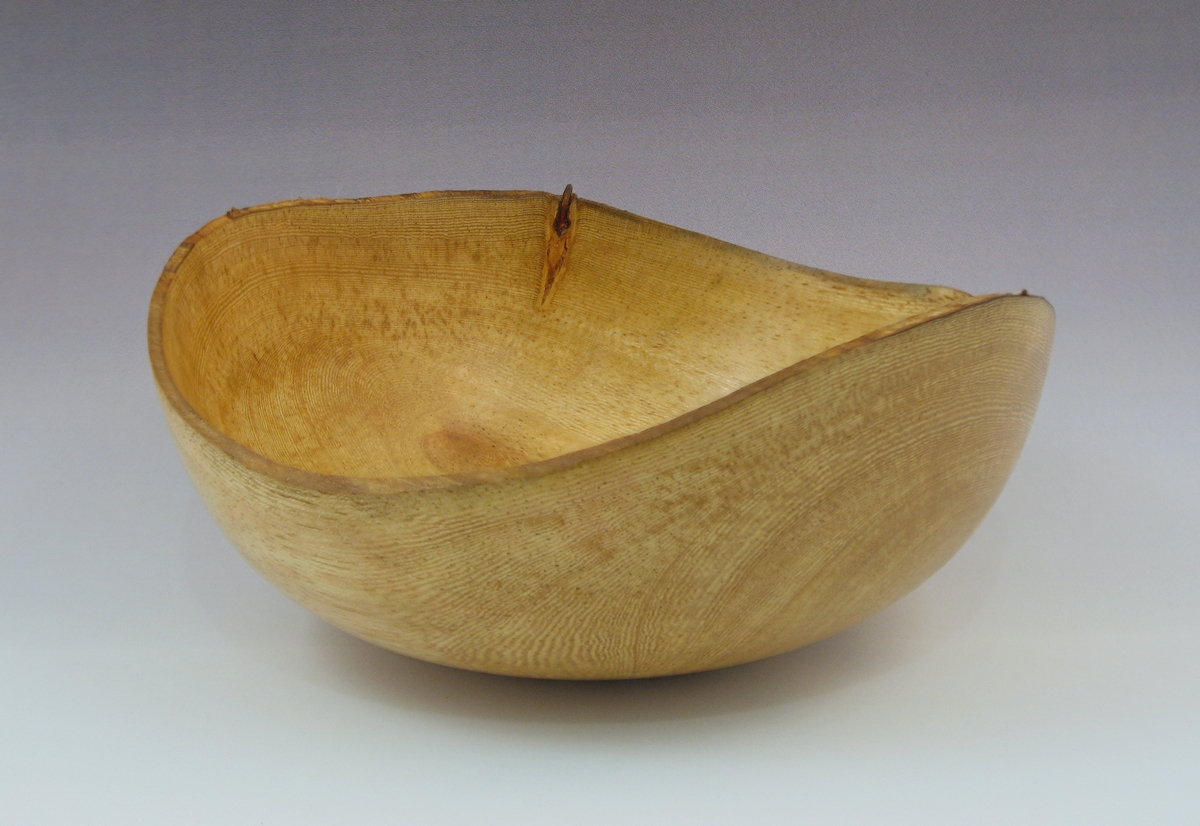
as some of these timbers are inclined to do. This bowl was roughed out while
green to avoid any mould discolouration.
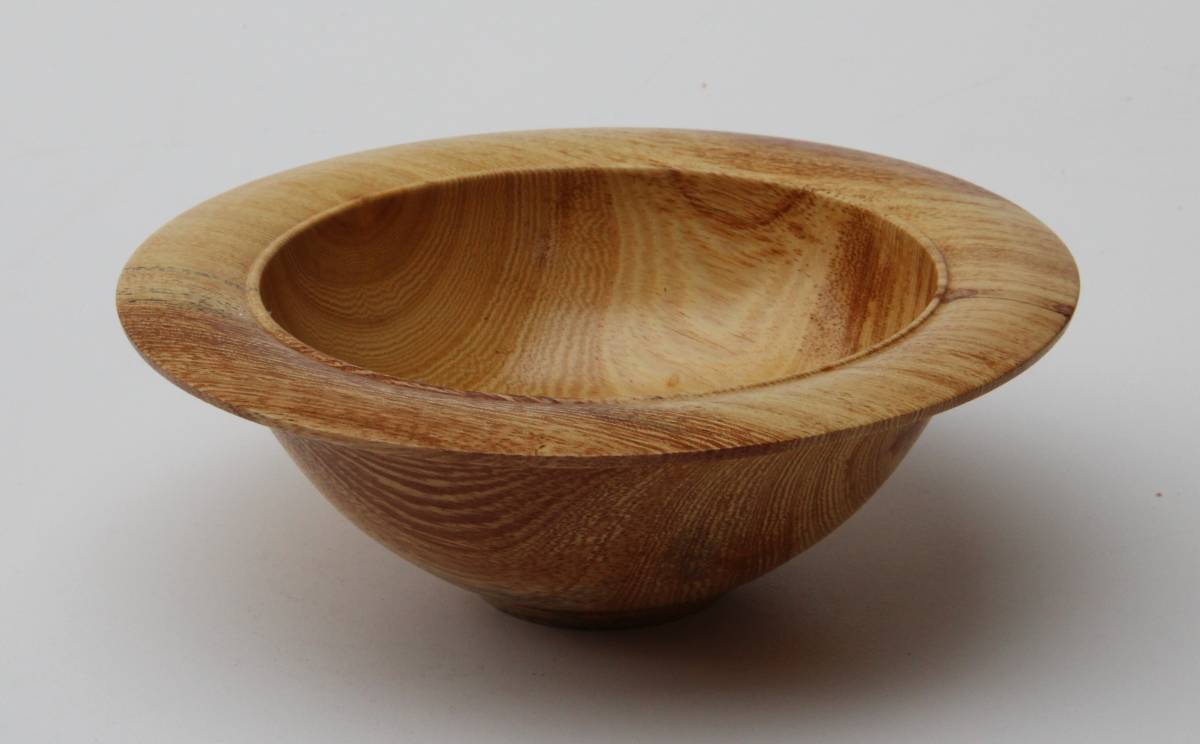
A bowl turned from the same log some years later once it had dried well.
Finished with Kunos hard-wax oil. Still has a nice look to it even with the
discolouration.